
How it began
My girlfriend, who is now my wife, comes from Dharmavaram, a small town in Anantapuram district, Andhra Pradesh. Dharmavaram is a town of weavers. Its silk sarees are known all over India.
I started visiting often. And every time I went, one thing stayed with me. The people who made these beautiful sarees were poor.
Then I would come back to the city and walk past the big silk shops. The same sarees sat there, neatly folded, with price tags that made people stop and think twice. The shops were busy. They were growing. They were doing well.
I could not make the two pictures fit together. It was the same saree. Why was the person who made it struggling, while the people who sold it were growing?
It bothered me. It stayed in my head long after I left Dharmavaram. So I started asking questions, and I kept asking until the picture became clear.
The problem
The first answer was in the work itself. A handloom saree is made by hand, thread by thread. One weaver can finish two, maybe three, in a whole month. No machine speeds this up, and no factory can copy it. So however hard a weaver works, there is only so much they can earn.
The second answer was in the people standing between the weaver and the buyer. A master weaver gives a group of weavers some money in advance, and in return they work only for him, often for a long time. The master weaver sells the sarees to a wholesaler. The wholesaler sells them to a retailer. And the retailer sells them to you. At every step, someone takes a share. By the time a saree reaches a city shop, most of what you pay has gone to people who never sat at the loom.
The solution
Once I saw this, I could not unsee it. And the answer felt simple. What if the weaver could sell straight to the buyer? Then the money lost in the middle could go back to the hands that made the saree.
So my co-founder, Hareesh Vemala, and I started Picksilk. Like so many startups in Bangalore, it began in a small 2BHK apartment.
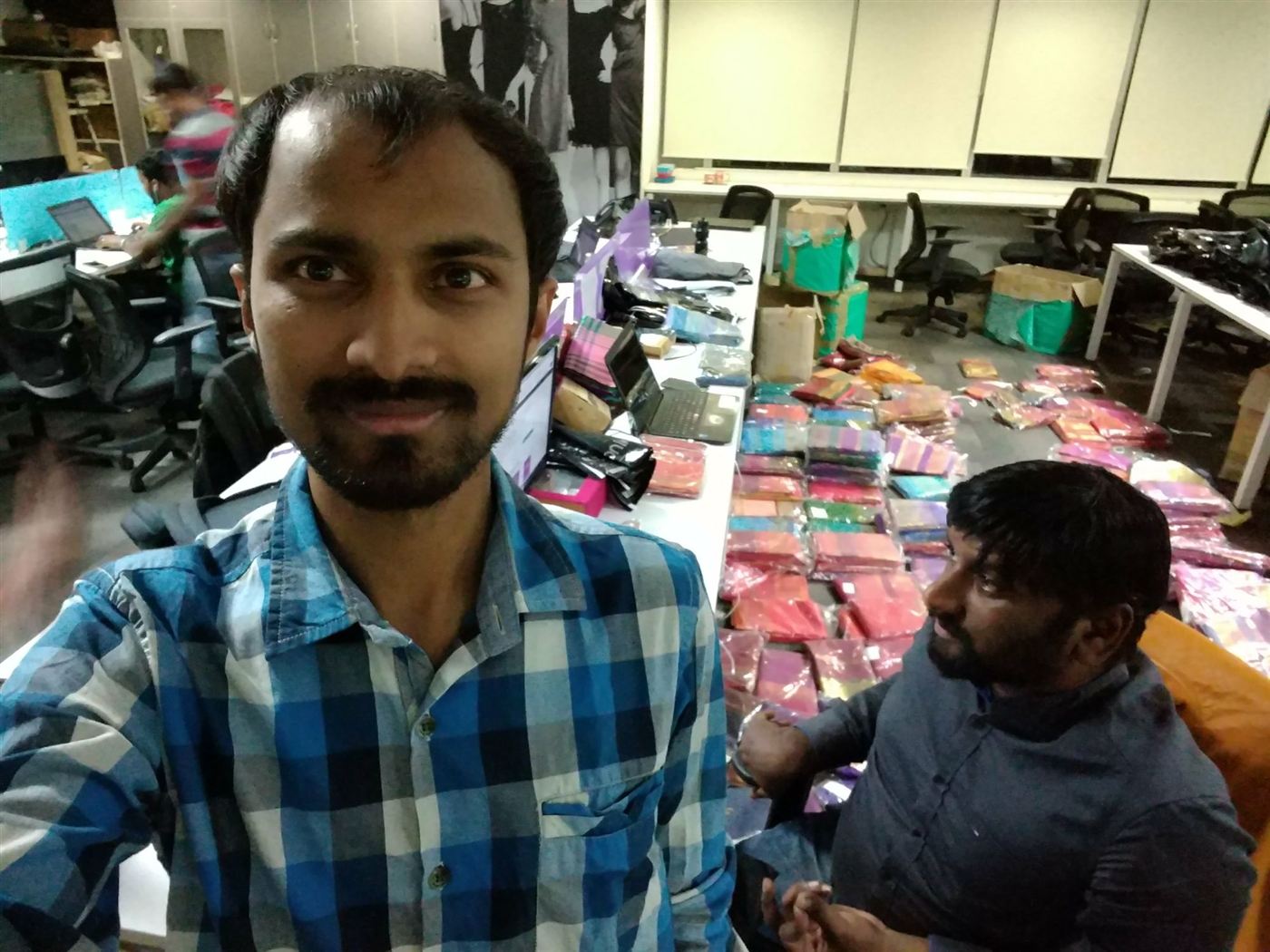
We cut out the middlemen. We paid weavers the full retail value of what they made. We opened our own warehouses in seven handloom clusters — Pochampally, Uppada, Dharmavaram, Kanchipuram, Chanderi, Sambalpur and Banaras — so we could be right there, close to the looms. Then we went from one cluster to the next, meeting weavers and bringing them in, one by one.
Now a saree could travel from the loom straight to the buyer's door. And the money could travel back to the person who made it.
Growth
Slowly, it grew. Three thousand weavers joined us. Every day, we were shipping sarees worth twenty lakh rupees. Picksilk became the largest online marketplace for silk sarees in India.
We also made a short film to tell people what Picksilk stood for. We called it Happiness is Beauty.
What I learned
But underneath that growth, something was quietly pulling against us.
In those days, cash on delivery was how India shopped online. Almost 85% of our orders were COD.
Our weavers could not wait for their money. They used what they earned from one saree to buy the raw material for the next. So if we got ten lakh rupees of orders, we needed about ten lakh rupees in hand to pay them.
But COD money took twenty days or more to reach us. Every new order meant we paid first and got paid much later. The faster we grew, the more money we needed upfront. Without meaning to, we had built a negative cash flow business. And a negative cash flow business is very hard to scale.
At the same time, e-commerce in India was going through a hard phase. Valuations were falling, and investors had little interest in new e-commerce companies.
There was a reason closer to home, too. My family needed me, as they always had. I could not stay and see Picksilk through to the end.
It taught me something I still carry with me. A good idea is not enough on its own. You also have to understand how the money moves: when it goes out, and when it comes back. Growth is only good when the cash can keep up with it.
That is when Voonik came in. In 2016, Voonik acqui-hired Picksilk, and we joined them. Together, the work kept growing. On sale days, sales peaked at two crore rupees a day. Of every four rupees ordered, three became sales that were kept, not cancelled or returned (75% NMV), and the business was operationally profitable.
And it all began with one simple question, asked in a small town: why are the people who make something so beautiful so poor?